A screen position that suits the room
Good wall mounting starts before the bracket is opened. We consider sofa position, viewing distance, eye level, window reflections and the way people move through the room. In Noordhoek homes with wide glass doors facing the valley, glare can matter as much as height. The proposed position is marked and confirmed with you before drilling. This simple step helps prevent a screen that looks impressive while switched off but becomes uncomfortable during a full film or sports match.
Choosing the correct bracket
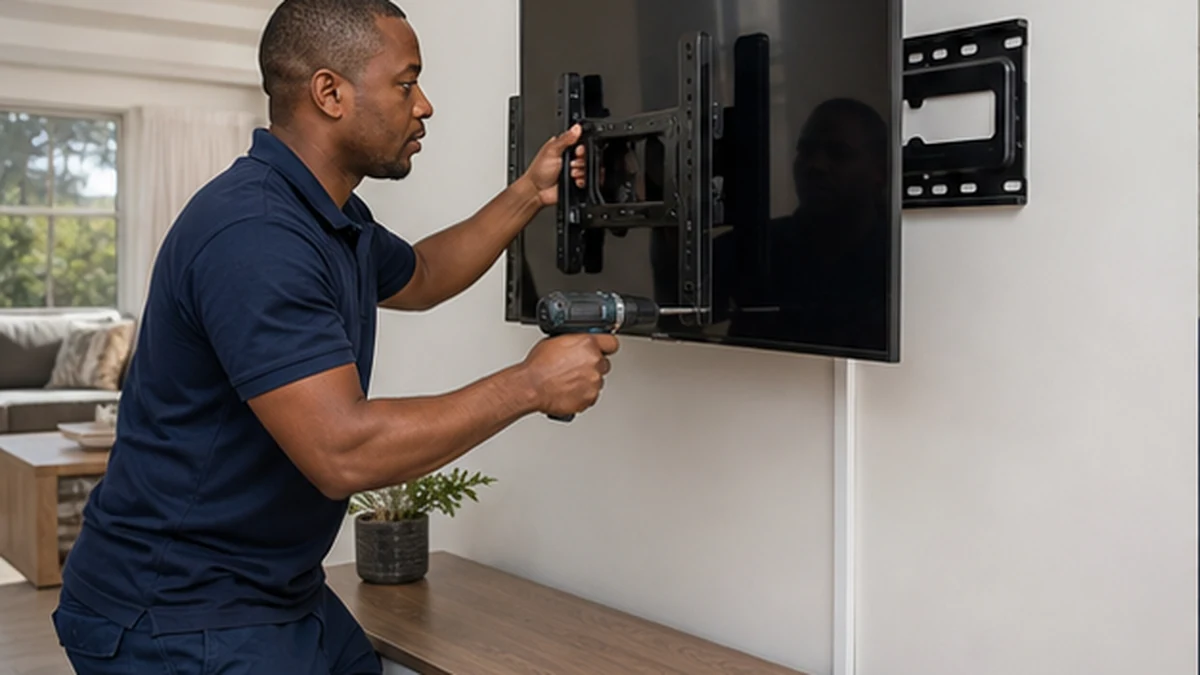
The television size, weight, mounting pattern and desired movement determine the bracket. A fixed mount gives a slim profile. A tilting mount can help when the screen must sit higher, while a full-motion arm allows viewing from different parts of an open-plan room. We check the bracket rating and wall fixing method rather than relying on screen size alone. Customer-supplied brackets are inspected before use, and unsuitable fittings are discussed before work proceeds.
Secure fixing for different walls
No single fixing suits every Noordhoek property. Brick, concrete, timber framing and dry wall each require a different approach. The mounting area is checked for likely services and suitable support. The screen is levelled, attached and tested through the bracket’s intended movement. Where wall construction or concealed utilities create uncertainty, we explain the limitation instead of drilling blindly. Safe support matters more than forcing the television into an impractical position.
Cable concealment without a messy finish
Power, HDMI, aerial, network and satellite leads are planned as one group. Depending on the wall and access, cables may run in neat surface trunking or through an appropriate concealed route. A decoder can be placed in a ventilated unit below the screen, and our can connect and configure it. Power work requiring an electrician is identified clearly. We do not hide unsafe extensions or overloaded adaptors inside a wall.
Connect your viewing sources
After mounting, we connect the agreed devices and select sensible HDMI inputs. DStv, Openview and terrestrial aerial connections can all be checked at the television. If a satellite service is being added, see our or options. Soundbar placement, remote line of sight and network access are considered so the wall looks clean without making everyday controls difficult to use.
Level, tested and ready to watch
The final inspection covers bracket security, screen level, cable strain and safe movement where an adjustable arm is used. The television is switched on and each connected source is checked for picture and sound. We tidy the work area and show you how far the bracket can move without pulling a lead. You also know where the cables run, which makes future upgrades easier. Input names can be simplified where the television allows it, helping everyone select the correct device without cycling through unused connections. The result should feel integrated into the room, not merely attached to a wall.