Shared satellite infrastructure planned properly
A communal system distributes satellite signal from shared infrastructure to several dwellings or units. It needs a clear design, not a collection of splitters added over time. We start by recording the number of units, existing cables, equipment location and the decoder types residents are likely to use. For sectional title or managed properties, the body corporate or authorised representative should approve access and scope. The aim is stable, serviceable distribution with each private decoder remaining under the resident’s own account arrangement.
Surveying the property and cable routes
The survey covers the dish position, equipment cabinet, risers, roof access and routes to each unit. Signal loss grows with cable length and poor connections, so long paths are measured rather than guessed. Shared buildings and compact developments near Noordhoek Village may have very different constraints from spaced dwellings in Crofters Valley. If the requirement is for a business or hospitality venue rather than residences, our is the better starting point.
Distribution equipment and signal balance
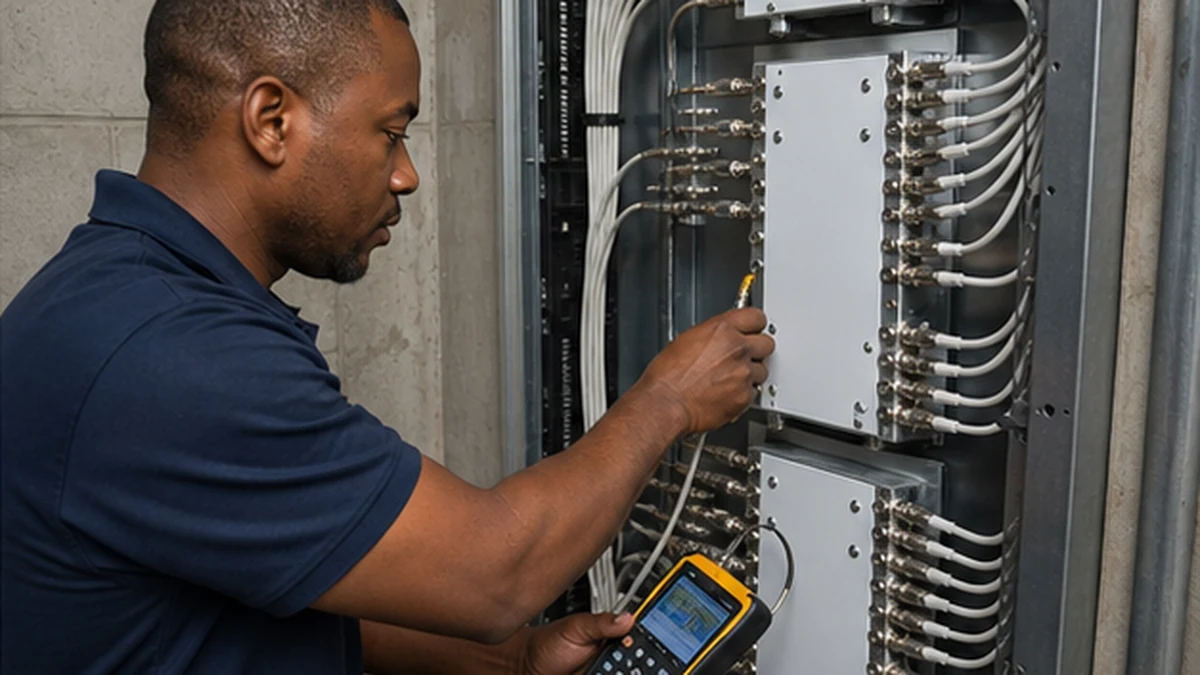
The design may use multiswitches, amplifiers, taps and suitable coaxial cable, depending on the number of feeds and system layout. Components must support the intended decoder environment and be placed where authorised maintenance is possible. Levels are checked at the source and representative end points. Simply boosting a poor signal can also boost noise, so the dish and incoming feed are verified first. Each termination is labelled to make later fault finding more efficient.
Installing with residents in mind
Communal work affects more than one household. Access, interruptions and testing should therefore be planned with the property manager. Cabling is secured through shared areas and equipment is kept away from casual interference. We avoid promising that every existing cable can remain until it has been tested. Where residents want extra viewing points inside their own units, the can assess the private portion separately from the communal network.
Fault finding on an existing system
A fault affecting one unit usually points to a different part of the system than a fault affecting the whole property. We compare signal at the dish, distribution equipment and relevant outlets to narrow the cause. Loose connectors, damaged drops, water ingress, power loss to active equipment and dish movement are checked in a logical order. When the source signal has shifted, our can restore and measure the incoming feed before downstream components are blamed.
Documentation and practical handover
At completion, the authorised contact should understand the main equipment location, labelled feeds and any areas that need controlled access. We record the tested layout and explain which faults belong to the shared system and which may sit inside an individual unit. That distinction reduces unnecessary disruption to other residents. A simple equipment schedule also helps a future technician identify the active components without tracing every cable again. Future additions should be assessed against available capacity rather than connected informally, helping the communal network remain orderly and easier to maintain.