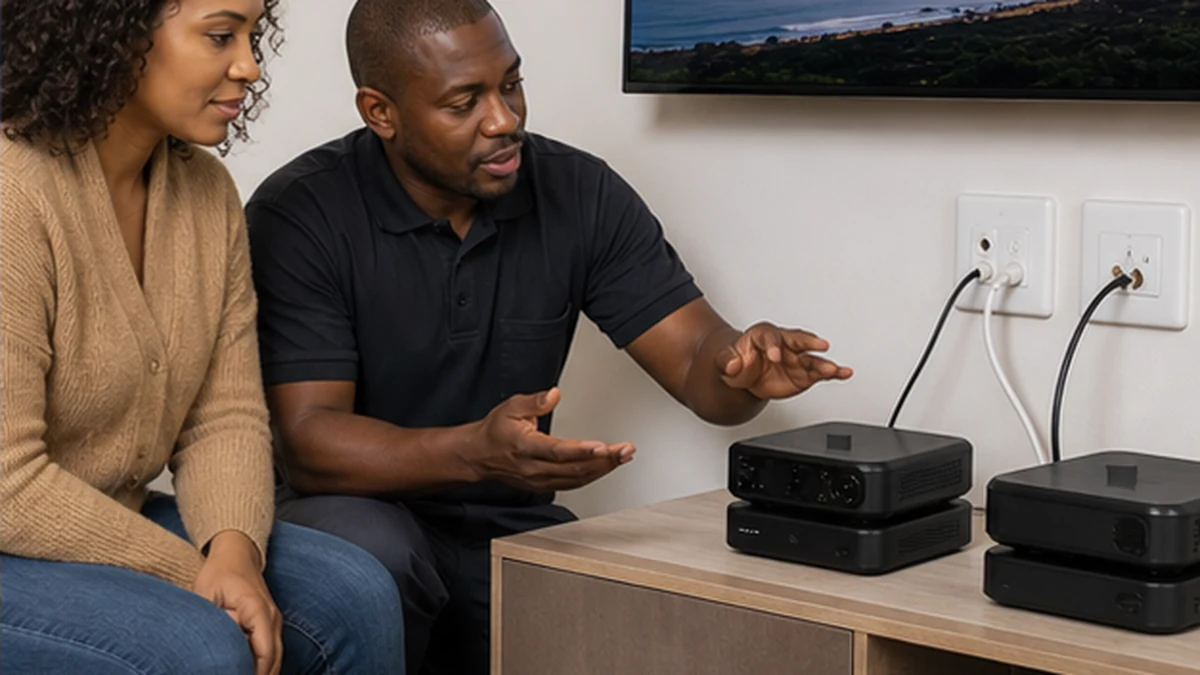
An extra TV point and Extra View are not two names for the same setup. A basic extra point usually distributes the picture from one decoder to another television, so both rooms watch the same selected channel. Extra View uses compatible linked decoders so viewers can watch different DStv channels at the same time, subject to the provider’s current account and equipment rules. The right choice depends on how each room is used, where decoders can sit and what cabling already exists. Decide on viewing behaviour first. Then design the signal, control and network routes.
What an extra TV point does in a Noordhoek home
A mirrored point sends the output of one decoder to another screen. It can suit a bedroom, gym or occasional-use room where showing the same programme is acceptable. The design may use HDMI distribution or another suitable method, each with distance, control and picture-quality considerations.
The second room still needs a way to control the decoder if it is not nearby. Cheap splitters or improvised long leads can create handshake problems, interference or a poor picture. Plan the route through the Noordhoek services hub rather than assuming any spare coax outlet carries the required output.
- Same channel on connected screens
- One decoder and subscription context
- Remote-control solution needed
- Distribution method suited to distance
How Extra View works in Noordhoek
Extra View links compatible decoders under the relevant customer arrangement. Each connected television can then select its own channel through its decoder. The installation must provide the correct satellite signals, decoder communication and account setup for the chosen equipment.
This is the option to consider when family members regularly want different live channels. The Extra View installation service covers decoder linking, LNB and cable requirements. Confirm current provider rules before buying used or additional equipment.
Comparing cabling and equipment costs
A mirrored point can need less equipment, but cost depends on distance, concealed routes, picture format and control accessories. Extra View adds a decoder and a more involved satellite arrangement. Existing dishes, LNBs and cable may or may not be compatible, so a quote should not assume they can all remain.
Large Belvedere, Brookwood and Noordhoek Manor homes can have long paths between rooms. Cable quality and distribution equipment matter over distance. If the entire installation is ageing, the dish, LNB and cable assessment can identify what is reusable before the multi-room work begins.
- Rooms and viewing habits
- Existing decoder models
- Dish and LNB compatibility
- Cable distance and concealment
- Control method and network needs
Room layout decisions for Noordhoek properties
Choose the TV and decoder position together. A wall-mounted screen needs nearby power, ventilation for equipment and a cable exit that the bracket will not crush. If the decoder is hidden in a cupboard, allow airflow and reliable control. Do not seal active equipment behind the television.
The TV mounting height and layout guide helps coordinate the display position with HDMI, coax and data. In The Lakes or Stone Haven, a detached room may also need a stronger network link if streaming forms part of the plan.
Choosing between mirrored viewing and Extra View
Choose a mirrored extra point when the second screen is occasional and showing the same decoder channel is acceptable. Choose Extra View when independent live viewing is the core requirement. Streaming apps may offer another answer for some content, but they depend on service rights, device support and reliable internet.
Write down what each room must do before requesting a quote. State whether viewers need different live channels, recording, remote control and streaming. Use the Noordhoek multi-room contact page to share room distances and decoder models so the proposed system matches the requirement.
Think about everyday control as carefully as channel choice. A mirrored screen can be frustrating if someone in the main room changes the decoder while another person is watching. Extra View provides independence, but each room needs a sensible place for equipment and access for resets or servicing. Ask for a simple diagram showing which decoder, cable and remote belongs to each room. Label both ends of concealed runs before furniture is installed. If a future room may need independent viewing, install an accessible route or draw wire now rather than opening finished surfaces later. This planning does not lock you into equipment, but it preserves options. During handover, change channels from every room and check sound, picture and remote response. Restart each decoder once so linking problems appear while the installer can still test them. Keep the diagram with account and equipment records for future moves or upgrades.
Frequently asked questions
Is an extra TV point the same as Extra View in Noordhoek?
No. A basic point commonly mirrors one decoder output, while Extra View uses linked compatible decoders for independent channel selection under the applicable provider rules.
Can two TVs watch different channels from one decoder?
No. One decoder tunes the selected service for its output. Independent live channels require another compatible viewing method, such as an approved linked-decoder arrangement.
Can I control one decoder from the second room?
Yes, with a suitable remote-control extension or distribution system. The method should be planned with the signal route and distance rather than added as an afterthought.
Do I need new cables for Extra View?
Possibly. It depends on the existing dish, LNB, cable topology, decoder models and condition of each run. Testing should confirm what can be reused.