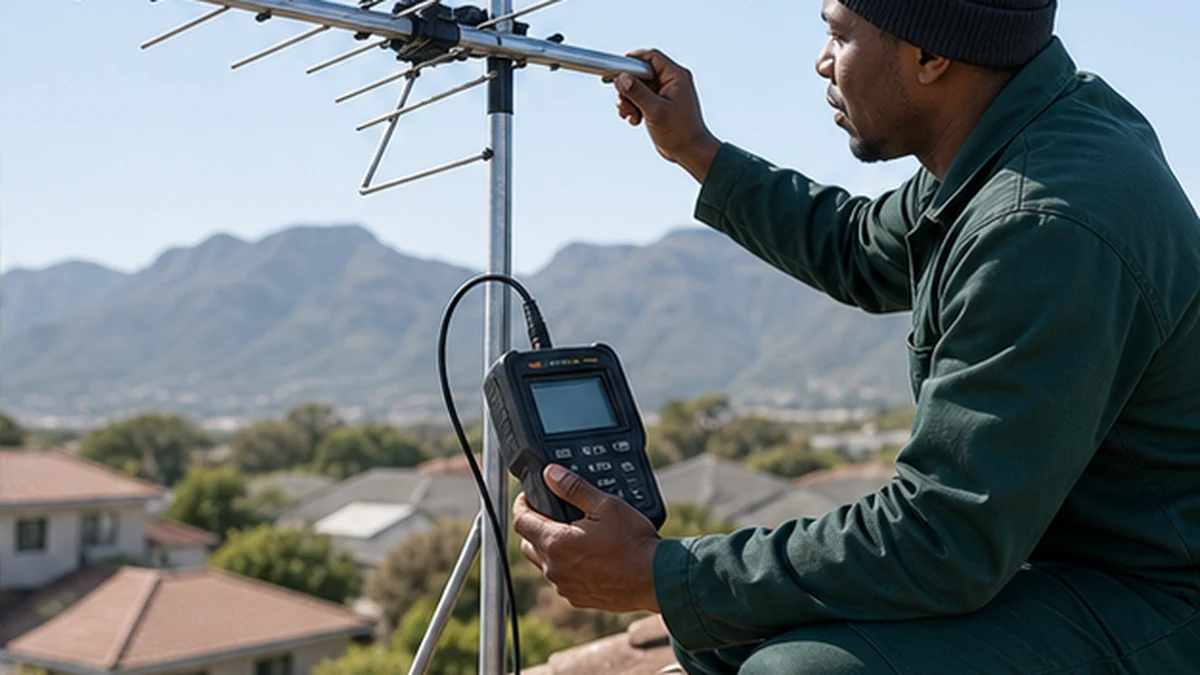
Terrestrial TV reception starts with a survey
A TV aerial should be chosen and positioned for the signal available at the property. Noordhoek’s terrain, trees and varied roof heights can produce very different reception from one road to the next. We inspect the mounting options, existing aerial, cable condition and number of television points before recommending work. A larger aerial or amplifier is not automatically better. The incoming signal must be measured so the system solves the actual reception problem.
Choosing a safe mounting position
The aerial needs clear exposure in the correct direction and a mount that can handle local wind. It should also remain reasonably accessible for future service. Roof material, chimney condition, fascia strength and nearby power lines affect the mounting decision. We avoid attaching equipment to weak or unsuitable structures. In exposed parts of Noordhoek, firm galvanised hardware and correctly secured cable help reduce movement and fatigue during seasonal weather.
Cabling for a clean, stable picture
Old coaxial cable, loose plugs and water-damaged joins can undermine a perfectly good aerial. We plan the shortest practical route, secure external cable and protect entries from water. Indoor terminations are fitted neatly and labelled where several points meet. If the television is moving onto the wall, our can coordinate the aerial outlet and screen position so the final leads do not hang below the display.
Single and multiple TV points
One aerial can sometimes serve more than one television, but every split reduces available signal. We calculate the distribution layout and test the end points rather than adding splitters until a picture appears. An amplifier may be appropriate where measured levels and cable losses justify it. Too much amplification can overload a tuner and make reception worse. Each planned outlet is checked with the actual distribution in place, giving a more useful result than a test performed only at the aerial.
Aerial, Openview or DStv options
A terrestrial aerial receives available local broadcast signals. It is different from a satellite dish and does not replace every channel or service offered by a satellite platform. Households wanting free-to-air satellite television can consider . Those wanting subscription satellite viewing can use our . We explain the physical equipment difference so you can choose the route that matches the channels and television points you need.
Tuning and final reception checks
After installation, the aerial is aimed and measured, all agreed outlets are tested and the televisions are tuned where access allows. Available channels depend on local broadcast coverage and compatible television equipment, so a specific channel list should be confirmed from the live reception at the property. We check plug fit, picture stability and the condition of the final leads. Where several televisions are connected, each outlet is identified so a later room change does not create confusion at the splitter or amplifier. You are shown any amplifier power supply and the cable route, making future troubleshooting simpler.