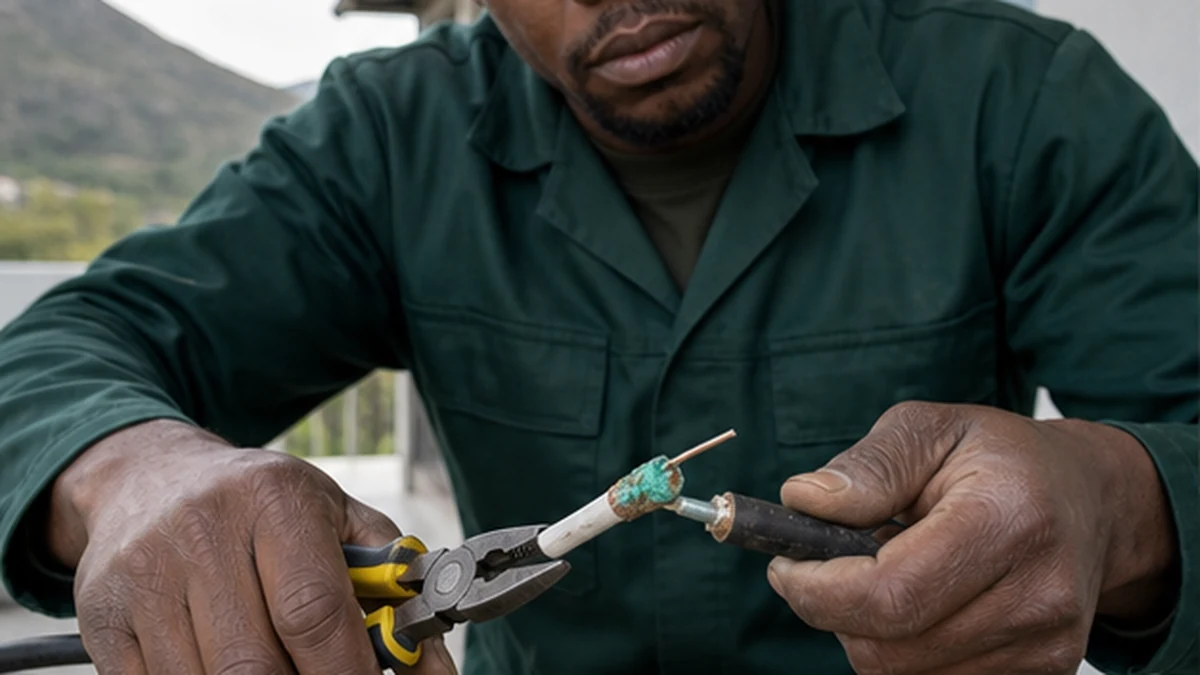
Water in DStv coaxial cable in Noordhoek can cause an intermittent picture, falling signal quality or complete loss of service. Moisture usually enters through an exposed connector, a damaged outer sheath or a cable route that lets rain run towards a joint. Coastal air can then speed up corrosion. Dry weather may appear to fix the problem, but contaminated braid and foil remain inside the cable. Replacing only the visible connector may therefore provide a short-lived result. The correct approach is to find the entry point, isolate power safely, test the affected run and replace every section that has carried moisture.
Why wet coax faults occur in Noordhoek
Outdoor satellite cable faces rain, sun, wind movement and salty air. A connector without a proper weather seal is an obvious entry point. Less obvious causes include a split sheath, cable rubbing against a roof edge, a downward loop into a junction or water following the cable through an unsealed wall opening.
Homes in Crofters Valley and De Goede Hoop can have long external runs between the dish and living area. More exposed cable means more places to inspect, not a reason to add joints. The dish, LNB and cable repair service covers testing of the complete signal path rather than guessing from the decoder screen.
- Loose or poorly fitted F-connectors
- Cracked cable insulation
- Unsealed wall penetrations
- Joints lying in gutters or damp soil
- Missing drip loops before entry points
Signs of water in DStv coaxial cable in Noordhoek
The fault may start during or after rain. Channels can pixelate, signal readings can swing or the decoder can report no signal. You may see green or white corrosion at a connector, darkened braid, rust staining or droplets when the cable is disconnected. These are strong clues, but moisture can travel beyond the visible end.
Do not repeatedly power-cycle the decoder as the main diagnosis. A wet line can affect voltage supplied towards the LNB. If the decoder also behaves abnormally on a known-good feed, arrange decoder and signal troubleshooting so both sides are checked safely.
Safe checks before calling an installer
Keep clear of wet roofs, ladders and overhead electrical hazards. From ground level, note whether the cable hangs loose, passes through a gutter or enters the wall without a drip loop. Record whether the fault follows rain and whether every channel or only some services are affected.
You can inspect an indoor wall plate for staining only after switching equipment off. Do not connect a visibly wet or corroded cable to another decoder. Avoid cutting the line randomly. This shortens it, can hide the point of entry and may leave contaminated cable in service.
- Switch equipment off before touching connectors
- Take clear photos of visible damage
- Note weather and fault patterns
- Keep wet cable away from powered equipment
Proper repair for a wet Noordhoek cable run
A sound repair starts with locating the highest point of water entry. The installer should inspect the LNB connection, outdoor route, joins and entry points. Suspect cable is disconnected and tested. When moisture has wicked along the braid, the affected section should be replaced rather than dried with heat.
New outdoor connectors need correct preparation and weather sealing. Cable should be clipped without crushing it, protected from sharp edges and arranged so water falls away before entering the building. For an ageing system with several faults, compare repair with a planned replacement DStv installation rather than paying for repeated patches.
Preventing another water-related signal fault
Inspect accessible external cable after severe weather and when garden or roof work has taken place. Keep joins out of gutters and irrigation zones. Do not paint over damaged cable as a repair. UV-resistant cable and suitable clips help, but workmanship at each termination remains critical.
Large Noordhoek plots may have cable near garden beds, outbuildings or exposed eaves. Mark the route before landscaping. If a fault is difficult to trace, use the local service contact form to describe when it occurs and upload or offer photographs of the route.
- Minimise outdoor joins
- Maintain drip loops and sealed entries
- Replace cracked cable promptly
- Check that clips remain secure
Ask for the removed wet section to be shown to you when practical. Visible staining or corroded braid helps confirm the diagnosis. The completed repair should also address the route that admitted water. Replacing cable without changing the exposed joint, missing drip loop or failed wall seal leaves the same pathway ready for the next storm.
Frequently asked questions
Can water in DStv coaxial cable dry out by itself in Noordhoek?
The outside may dry, but water and corrosion can remain between the cable layers. Signal can return temporarily and fail again. A contaminated section should be tested and usually replaced.
Can I waterproof a connector with ordinary tape?
Ordinary tape is not a dependable long-term weather seal. It can loosen, trap moisture or degrade in sunlight. The connector must first be fitted correctly and then protected with a suitable sealing method.
Why does the picture fail only after rain?
Rain can bridge a poor connection, enter damaged insulation or move a loose cable. Wind during a storm can also shift a dish, so the complete outdoor path should be checked.
Does a wet cable damage the decoder?
A wet or corroded line can disturb the signal and the power sent towards satellite components. Disconnect visibly wet equipment and have the cable and connected devices assessed rather than testing repeatedly.